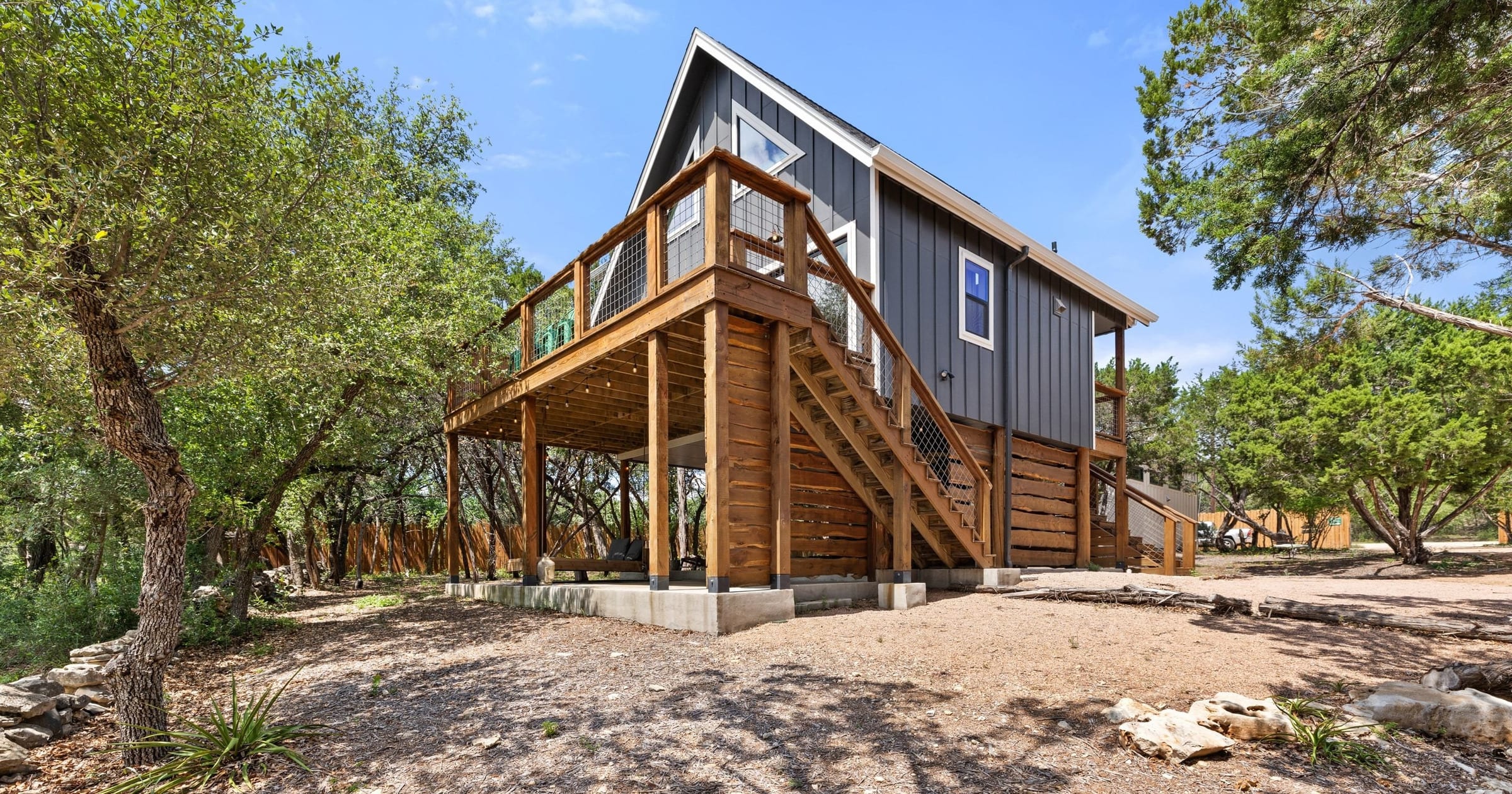

There's a kind of Hill Country listing that sells itself in the photos: a cabin on a few acres, a deck facing west, maybe a creek. Guests love that kind of place, and so do buyers. What the photos don't show is where the water comes from and where it goes. Out here, that's often a private well, and the wastewater usually goes to a septic system. For a short-term rental, those two things can matter as much as the view.
I walk through the well and septic checks in this video. Here's what I'd want answered before the option period ends.
Start with the well
If the property is served only by well water, I want to know how well that well performs. How deep is it? What's the flow rate? Ask the seller for the original well report. The Texas Groundwater Protection Committee says that report shows when the well was drilled, how it was built, its depth, the pump depth, and the yield at the time. If the seller doesn't have it, the Texas Water Development Board has a tool for looking up well reports.
Then get your own inspection from a licensed water well driller or pump installer. TGPC strongly recommends it, and says the inspector should be able to tell you the total well depth, the depth to water, where the pump is set, and the well's yield. Compare what it produced back then to what it produces today.
At the end of the day, there's one question: will this property produce enough water to support your guest count? A family of four and a full house of weekend guests use water very differently. More showers, more laundry, everyone doing it on the same Saturday morning. A well that was fine for the owner who lived there may struggle when every bedroom is booked. Ask your well professional to read the yield, and any pressure or storage tank, against how you plan to operate, not how the last owner lived there.
If the property is in a groundwater conservation district, TGPC notes there may be registration rules or pumping limits, so call the district. And if you're thinking about several cabins on one well, that's a different set of rules than a single house. Based on my reading of TCEQ's guidance, a system with at least 15 connections, or one that serves at least 25 people at least 60 days a year, can be treated as a public water system, and each cabin with running water can count as a connection. Ask TCEQ or a qualified professional whether a given property crosses that line.
Test the water
Private well water quality isn't regulated by the state, and TGPC is clear that testing is the owner's job. Texas A&M AgriLife's Private Drinking Water Well Basics recommends testing at least once a year for nitrate, total dissolved solids, and E. coli or fecal coliform, and also when the water changes, after well or pump work, or if someone who drinks it gets a suspicious illness. Use a lab on TCEQ's certified list, and run the first test during the option period.
Now septic
Same idea, with one big difference for short-term rentals. With STRs, we're often looking for ways to add bedrooms. If you add bedrooms, the septic system has to support them. A septic system is designed for a certain amount of daily use, and TCEQ's advice for septic owners says that if you use more water per day than it was designed for, it's hydraulically overloaded. A house booked to capacity every weekend may not be the use it was sized for. Get the permit file from the county or other local permitting authority, and have a licensed septic inspector or installer tell you what the system was designed and permitted for.
If it can't handle the extra bedrooms, could you add a second system? What would it cost to replace the one that's there? Based on my reading of TCEQ's page, you need a permit and an approved plan to build, alter, repair, or extend a septic system, so this is a permitting question, not just a construction one.
Find out how old it is. TCEQ says a system more than 15 years old may need to be replaced. That isn't a rule that every older system has to go, but it's a reason to have a licensed professional look closely.
And find out if it's a drip system. If it is, that drip field isn't buildable. TCEQ says not to build over any part of the system, including driveways, storage buildings, sidewalks, and patios, and not to drive or park on it. So if you're planning to add a pool, it can't go where the drip field is. Same for a casita or a bigger deck. Know where the field is before you fall in love with your expansion plans, and have a licensed septic professional confirm it. While they're out there, note where the well sits relative to the tank and field.
TCEQ doesn't require or regulate a septic evaluation at sale, though your lender might ask for one. I'd get one anyway, even on a cash purchase.
What to budget for, and what guests notice
Costs vary, so get quotes from local licensed providers during the option period. Plan for annual water testing, routine well and pump service, and, eventually, a pump replacement. TCEQ says a septic tank should be pumped every three to five years, and publishes a pumping table based on tank size and household size. A heavily booked rental isn't a typical household, so ask your septic provider what schedule makes sense. If the system uses drip irrigation or secondary treatment, TCEQ requires inspection by a maintenance company every four months, or maintenance by the homeowner where that's allowed. For an STR, I'd budget for that contract, and for a reserve, because repairing or replacing a tank or drainfield needs a permit. After closing, TCEQ says to notify the local permitting authority that you're the new owner.
Guests don't read well reports. They notice weak pressure when everyone showers at once, water that smells or tastes off, a slow toilet, or a wet spot in the yard. A lot of them won't know what not to flush, so clear house rules and a cleaning team that knows the system matter.
A short note on the disclosure, and the creek
As of July 1, 2026, Texas has a new form, TREC's Seller's Disclosure About Groundwater and Surface Water Rights. It's useful paperwork about what the seller knows and what rights exist, but it won't tell you how much water the well produces, whether the water is safe, or whether the pump is near the end of its life. And a creek view, a pond, or river frontage doesn't automatically come with the right to use that water. If your plan depends on filling a pond or irrigating from a creek, talk to a Texas water attorney before you count on it.
What I'd do during the option period
Get the well report and your own well inspection, including depth, flow rate, and storage, in writing. Test the water at a certified lab. Get a septic inspection and the permit file, and confirm the field doesn't conflict with anything you want to build. Check for a groundwater district, and confirm STR rules with the city or county. I can't tell you whether a given property can get an STR permit. That's their call.
None of this is a reason to pass on a property with a well and septic. Plenty of great Hill Country STRs run on both. It's a reason to know what you're buying, and whether it can support the business you're planning to run.
If you're looking at an STR in the Hill Country and want help thinking through the water and septic side, or you own one and are thinking about selling, I'd be glad to talk it through.
This is general information, not legal, tax, or engineering advice. Well and water-testing questions belong with a licensed well driller or pump installer and a certified lab. Septic questions belong with a licensed septic inspector or installer, and with the county or TCEQ for permits. Check STR rules with the city or county, water rights with a Texas real estate or water attorney, and tax questions with a CPA. Do your own due diligence before the option period ends.
ATX|STRS, a division of E-Rae Realty
Related reading