
It usually starts with a revenue projection. A buyer finds a house they love, plugs the address into an STR data tool, and sees a number that makes the property look like an obvious investment. Sometimes that number is realistic. Sometimes it is technically possible but would require perfect execution, a substantial renovation budget, professional-level hospitality, and a calendar with almost no mistakes. And sometimes it is just wrong.
I use short-term-rental data every day, but I do not treat a projected gross revenue number as the answer. It is the beginning of the analysis.
If you are buying an Airbnb or vacation rental in Austin, the real question is not simply, “How much can this house make?” The better question is, “What will this specific property realistically earn under my ownership, what will it cost to operate, and does the return justify the price and risk?”
Those are very different questions.
Start With the Property, Not the Projection
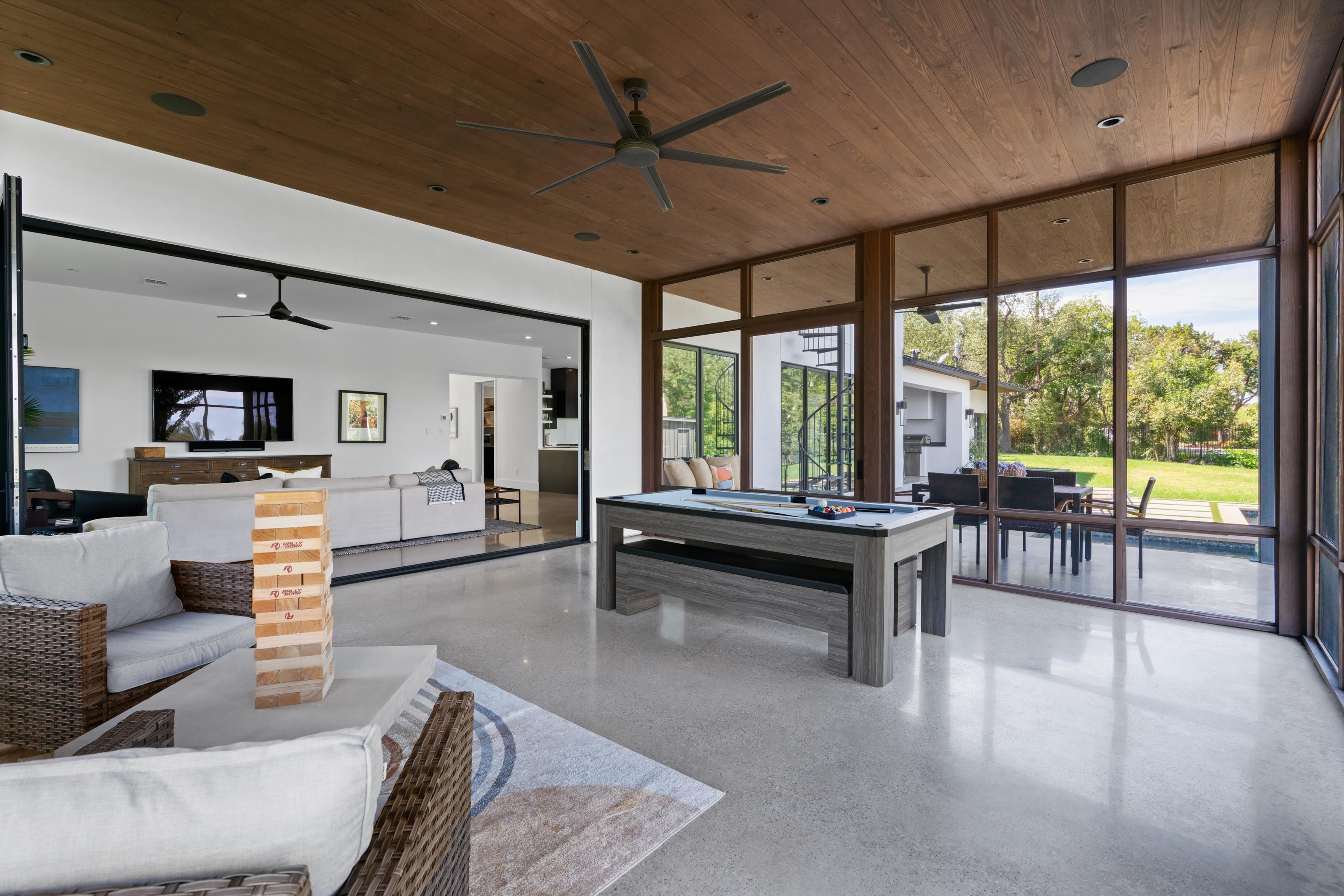
Two homes in the same ZIP code with the same bedroom count can perform very differently. A four-bedroom house with one cramped living room, a tiny kitchen, and no outdoor space is not competing on equal footing with a four-bedroom house that has a pool, a large dining table, multiple gathering areas, and enough bathrooms for a group to get ready comfortably.
Guest capacity matters, but usable capacity matters more. A listing may technically sleep twelve, but can twelve people sit down for dinner? Is there enough parking? Are there only two bathrooms? Does the backyard photograph well? Will the neighbors be miserable every time a group arrives?
I look at the entire guest experience: layout, privacy, bed and bath count, outdoor amenities, design potential, parking, walkability, proximity to demand drivers, and whether the home gives a traveler a reason to choose it over the next twenty listings.
Austin is not a market where putting a few bunk beds in a beige house automatically creates a high-performing STR. Guests have choices, and the properties that stand out tend to be the ones that feel intentional.

Gross Revenue Is Not Cash Flow
This sounds obvious, but it gets skipped constantly. Gross revenue is the amount collected before the bills show up. It is not what the owner keeps.
Depending on the property and how it is operated, expenses may include property taxes, insurance, utilities, internet, pool and lawn service, pest control, supplies, repairs, routine maintenance, platform fees, bookkeeping, permit costs, furniture replacement, and professional management. A house with a pool, hot tub, older mechanical systems, or extensive landscaping can produce more revenue while also being considerably more expensive to operate.
Then there are the irregular expenses. An air conditioner does not care that you already had a slow month. Neither does a pool pump, water heater, roof leak, or broken refrigerator. A reasonable underwriting model needs reserves for repairs and capital replacements instead of assuming every dollar left after the monthly bills is profit.
Management is another major variable. Buyers sometimes remove management fees from a projection because they plan to self-manage. That may be fair, but self-management is not free. It is a job. If the investment only works because your time has been valued at zero, I want to be honest about that before you buy it.
Use Comparable Properties Carefully
STR comps are more complicated than traditional sales comps. You cannot compare properties based on bedroom count and radius alone.
I want to know whether a comparable has a pool, view, hot tub, game room, exceptional design, lake access, or a walkable location. I also want to know whether it has been operating for years with hundreds of reviews or launched last month with no ranking history. A mature listing with strong reviews may outperform a nearly identical new listing while it builds momentum.
The operator matters too. Great photography, thoughtful pricing, responsive management, excellent reviews, and a well-designed listing can materially change performance. When I use a top performer as a comp, I am not assuming a buyer will automatically reproduce its results. I am identifying what that owner did to earn them and what it would take for the subject property to compete.
I also look at monthly seasonality rather than relying only on an annual number. Austin demand is uneven. A property may have outstanding revenue during major events and softer performance during other periods. Buyers need enough cash and patience to make it through the quieter months without panicking and cutting rates every week.

Jurisdiction and STR Eligibility Come Before the Furniture Plan
Before spending hours choosing wallpaper or calculating how many beds will fit, determine which jurisdiction controls the property and whether short-term-rental use is allowed.
An Austin mailing address does not necessarily mean the property is inside the City of Austin. It could be in another municipality, in the extraterritorial jurisdiction, or in an unincorporated area. The rules can be very different. HOA documents and deed restrictions also need to be reviewed separately; a city license does not override a private restriction.
Within the City of Austin, licensing requirements and property classifications matter, and an existing STR license should not be treated like an asset that automatically transfers with the sale. I advise buyers to evaluate the property based on their own ability to qualify and apply after closing, not simply on the seller’s current operating status.
Regulations and enforcement practices can change, so this is not a step to handle with a vague promise that “Airbnb is allowed in the area.” It needs property-specific due diligence.
The Best Opportunity Is Often in the Gap
Some of the best STR purchases are not the homes that already look like perfect Airbnbs. Those sellers often want to be paid for every dollar of future potential.
I am usually more interested in a property where the bones, location, and layout are right but the guest experience can be improved. Maybe there is space to add a bedroom without making the house feel crowded. Maybe an underused garage can become a game room. Maybe the backyard needs a pool, sauna, fire pit, or better connection to the interior. Maybe the house is simply marketed poorly and has never had professional design or photography.
That gap creates an opportunity, but only if the cost of the improvements is justified by the likely increase in revenue and resale value. Spending $200,000 on a remodel does not guarantee an extra $50,000 a year in bookings. Every improvement needs a job.
This is especially important for higher-priced Austin properties. A more expensive house may be beautiful, but the nightly rate does not always rise fast enough to support the larger mortgage, taxes, insurance, and furnishing budget. Unless the home is truly exceptional, buying below your maximum budget and investing in the experience can produce a better outcome than using every dollar on the purchase price.

Financing and Tax Strategy Can Change the Answer
The same property can look completely different depending on how it is financed. Interest rate, down payment, seller financing, renovation costs, and the buyer’s planned hold period all affect the return.
Some buyers are primarily seeking current cash flow. Others are looking for long-term appreciation, personal use, or potential tax benefits. Those goals should be identified before the property search begins because they influence what “good investment” actually means.
Short-term rentals may offer meaningful tax advantages in certain situations, but owning an Airbnb does not automatically qualify someone for every benefit they have heard about online. Average guest stay, material participation, placed-in-service timing, property use, and the buyer’s overall tax situation can all matter. This is where a qualified CPA who understands short-term rentals needs to be part of the conversation.
I can help evaluate the real estate and operating strategy. I am not going to reverse-engineer an investment solely to fit a tax claim from TikTok.
My Basic Stress Test
Before I feel comfortable with an Austin STR purchase, I want the property to survive a less exciting version of the projection.
What happens if revenue is lower than expected? What if the pool costs more to maintain, insurance increases, the home needs an HVAC replacement, or the property takes longer to establish reviews? Can the buyer carry it through a slow season? Is there a viable medium-term or long-term rental strategy? Would the property still be desirable to a traditional buyer at resale?
The backup plan should not be an afterthought. The strongest purchases usually have more than one way to work.
That does not mean every short-term rental must be immediately cash-flow positive under the most conservative assumptions. Austin investors may be balancing cash flow with appreciation, tax strategy, personal use, or a longer hold. It does mean the buyer should know which part of the return they are counting on and which assumptions would cause the plan to break.
The Bottom Line
A revenue estimate can tell you what may be possible. It cannot tell you whether a property is appropriately priced, legally viable, well suited to guests, affordable to operate, or aligned with your goals.
That takes a more complete analysis.
When I help a buyer evaluate an Austin-area STR, I am looking at the purchase as both real estate and a hospitality business. The house has to make sense on paper, but it also has to work in real life—for the owner, the guests, and eventually the next buyer.
If you are considering an STR purchase in Austin or the surrounding Hill Country, I can help you evaluate the property, the realistic revenue range, the operating costs, the regulatory questions, and the improvements most likely to matter before you make an offer.
This article is for general informational purposes only and is not legal or tax advice. STR regulations, private restrictions, and tax treatment are property- and owner-specific. Buyers should consult the appropriate legal, tax, insurance, and municipal professionals during due diligence.